
Choosing Slovenia: An American Couple’s Journey After 60

Updated: Apr 15

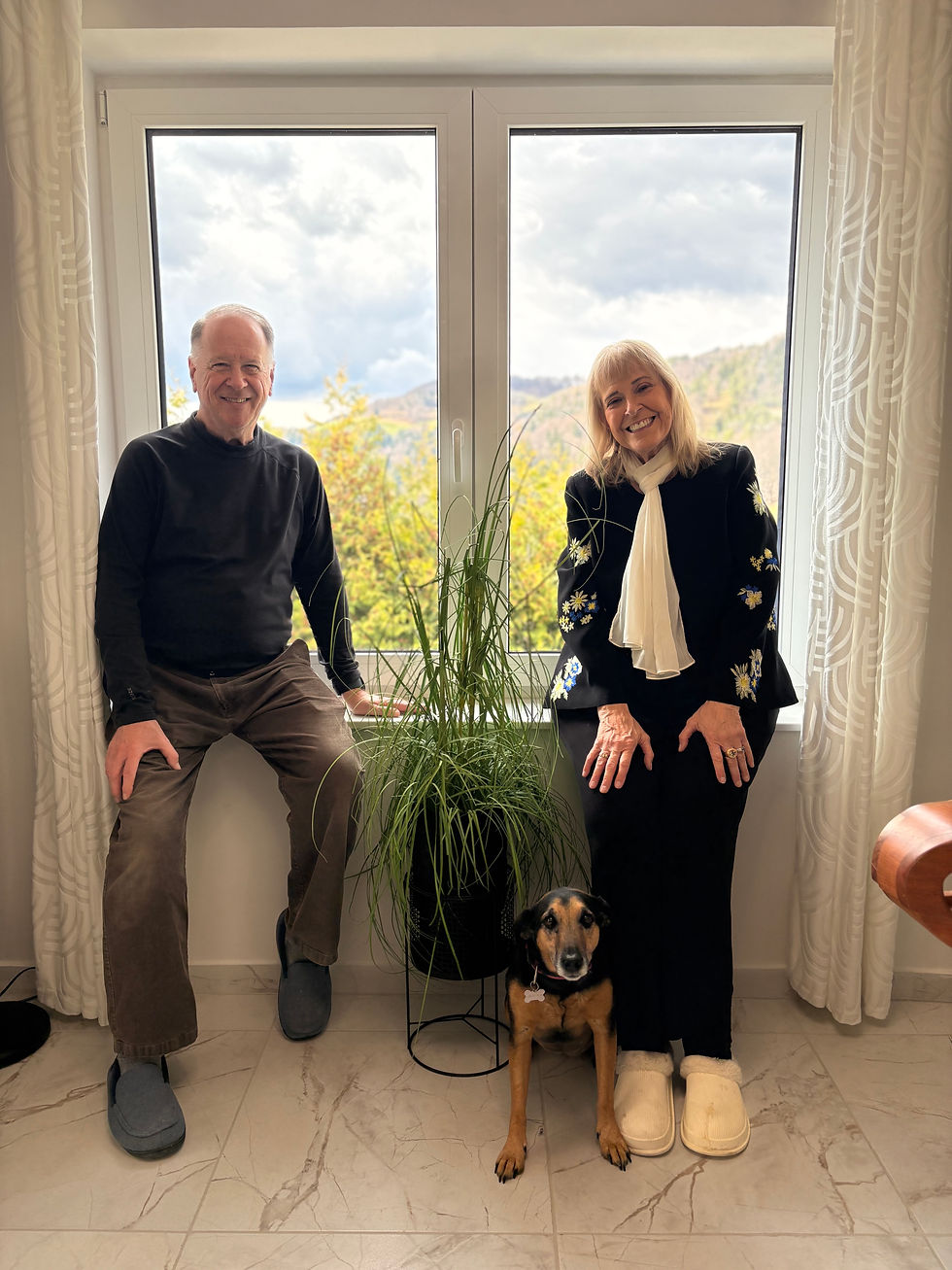
In the peaceful village of Javornik above Štore, where rolling hills, fresh air, and quiet define daily life, I meet Sharon, a retired American who moved to Slovenia with her husband Steve five years ago.
After more than a decade of living and working across the world, the couple chose Slovenia as the place to retire. What started as a carefully considered decision turned into something much more personal: building a home, forming connections, and slowly becoming part of a local community.
Shortly after arriving, they baked cookies and set out to meet their neighbours. What they expected to be a quick introduction turned into a three-hour visit—and their first real taste of Slovenian hospitality.
Officially retired, Sharon still keeps active professionally, consulting in higher education internationally. She is also the author of the 2026 book Low-Cost to Debt-Free: A President’s Guide to Affordable U.S. College Degrees.
As for Steve, although he is retired, he remains busy creating digital soundscapes using modern technology. You can explore his work and subscribe to his YouTube channel, The World in Sight and Sound.
What motivated you to choose Slovenia?
It was really a process based on comparison with other European Countries and personal criteria. We looked at several countries—Malta, Greece, Georgia, Kosovo, Scotland, Portugal, Spain—and created about ten criteria to evaluate them.
We considered things like cost of living, healthcare, residency options, the ability to buy property as Americans, access to transportation, how widely English is spoken, and proximity to other countries and our families. Slovenia came out on top.
We had already spent about 15 years living abroad, mostly in Europe, which I’ve loved since childhood.
What do you like most of living in Slovenia?
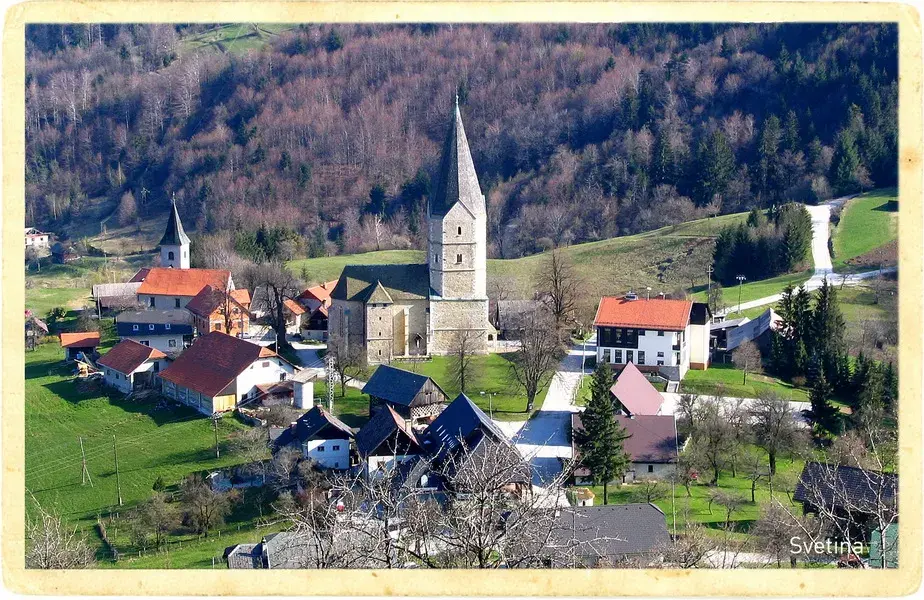
What we love most is the environment. We wanted space, nature, and a peaceful setting. Here, we look out the window and see open hills. Slovenia really protects its natural beauty in a way many countries don’t.
What was it like to build a house here?
It wasn’s easy but If I’m honest, I would do it again—but only now that I know what I know.
We bought a house in its third construction phase, because I wanted the freedom to shape it—knock down walls, redesign spaces, and make it truly ours. Most homes here didn’t fit our style, and I enjoy the creative process.
Finding a contractor was one of the biggest challenges—we contacted around 12, and only one came back with a quote. This was right after COVID, and language barriers didn’t help.
We also ran into legal complications with our chosen contractor that couldn’t be resolved. At one point, we even went to meet with attorneys, but were advised to drop the case because it would take too long and the price to pursue legal action could be quite high.
Building regulations weren’t always clear, and communication with our contractor and subcontractors wasn’t very transparent. Fortunately, our architect helped resolve key issues, especially regarding approvals.
What has been the biggest challenge—and reward of living in Slovenia?
One of the biggest challenges has been the language barrier. We do not speak Slovenian, and although many people speak English, it has still made everyday interactions and deeper integration more difficult. We also found learning the language to be challenging.
At the beginning it was also difficult to enter social circles. Here on the countryside they are already well established, and it can take time to enter the circle and find your place.
At the same time, people are very kind and welcoming. We’ve been invited to dinners and gatherings, and we’ve built friendly relationships with our neighbors. That part has been really positive.
Here, living in the countryside, I had to be more proactive. At the beginning, I would drive into town just to sit at a café and talk to people.
For me personally, integration also changed because I’m no longer working full-time. In the past, I met people through work and professional networks.
Tell us about your ‘’cookie introduction experience’’.
That was one of our best early experiences—and a big cultural lesson. I decided to bake Christmas cookies for all our neighbors – 18 homes.
We thought we’d visit five houses a day, quickly introduce ourselves, give cookies, and move on. This is how it’s done in America. But that’s not how it works here. You don’t just knock, say hello, and leave. You’re invited in, offered drinks, and you stay for hours. What we thought would take a few days turned into weeks! In the end, we delivered cookies with Christmas cards to the neighbors we hadn’t managed to visit yet. Later, we laughed about it all together.
Do you see Slovenia as your long-term home?
At this state in our lives, we do see Slovenia as our home for as long as we are both together, healthy and able to enjoy it. We have built a life here and have grown to appreciate the community, the landscape and the overall quality of life. If something were to happen to one of us, it might change. I would probably move closer to family, while my husband says he would stay here. Like many people living abroad, we also think about the practical aspects of ling-term planning. Navigating legal and administrative processes – such as managing an estate or selling a home – can be a more complex here than what we are accustomed to in the US and that is something we are mindful of.
What advice would you give to other retirees considering Slovenia?
For fellow Americans considering a move to Slovenia, my strongest advice is to come for at least a year first—rent, explore different regions, and really get to know the country. Slovenia is small, but very diverse. Where you live makes a big difference, so it’s important to orient yourself. Personally, I would spend more time renting and understanding the system before building. And I would make sure I had the right contacts from the beginning—especially for construction and legal matters
What are the biggest pros and cons of living in Slovenia?
There are lots of proses, that is why we have considered it in the first place.
Nature: Beautiful, well-preserved nature, peaceful lifestyle
Location: Central location in Europe, transportation and proximity to close by airports Zagreb, Vienna, Budapest and Venice.
Safety & Society: it’s a safe and economically stable country with friendly and welcoming people, most speak English, so you can get by easily.
Easy to move: Friendly to pensioners: free transportation card for pensioners, bilateral agreement between USA And Slovenia in purchasing a house and residency and not being obliged to learn Slovene language if you are 60 plus.
Arts and culture: great variety and high quality of art and performances, rich cultural program across different Slovenian towns. Also proximity to some of the world’s best Opera and theater houses. And we are also major sports fans, especially local soccer and handball.
Healthcare system: great public and private health care system, affordable and accessible.
Weather: Slovenia has all four seasons, but not too much snow for those of us who do not want to shovel snow at our age!
We did not appreciate some hurdles along the way, such as:
Government bureaucracy and administrative processes are very slow and not always coordinated between offices
Language barriers at times
Slower pace when dealing with government regulations, import of the car, registration process, services or construction
Some useful Tips
What residence permit do you have that allows you to live in Slovenia as the USA citizen? | We presently have a temporary residency permit. Later this year we will quality for a permanent permit. |
How does the cost of living in Slovenia compare to the USA? | In Slovenia, we have found that the cost of living is a mix. Overall, I would say Slovenia is not necessarily “cheaper” or “more expensive”—it is simply different. Your experience will depend on your lifestyle, where you live, and what you prioritize. Some things are less expensive here, while others are more. For example, everyday expenses such as dining out, local food, and some services can be more affordable than in many parts of the United States. At the same time, certain costs—particularly those tied to taxes—are noticeably higher. We also notice higher costs in areas such as value-added tax (VAT), certain services, and administrative fees. On the other hand, healthcare costs and some daily living expenses can feel more manageable compared to the U.S. |
Where do you get your health care and do you have a local insurance plan? | We are both still using the USA health care system. Presently we have additional accident/emergency insurance to protect us here in Slovenia. |
Do you pay an income tax in Slovenia? | Yes |
Purchase car or import it? | For example, although we were able to buy a house immediately due to the bilateral agreement between the U.S. and Slovenia, we then could not register a car because our residency permit wasn’t yet approved. So we could own a home—but not legally drive. Even more difficult: car registration is tied to residency. Over five years, there were three periods when we couldn’t use our car at all because our permits were delayed |
Local bank account or foreigner? | We have both a local bank account as well as our USA bank account. |
Comments