Sabin’s Top Tips for Foreign Entrepreneurs
Challenging— but not impossible. Have financial buffer, be resourceful, build a strong network, learn Slovene, and think beyond Slovenia’s market.
Why Slovenia?
Safe, family-friendly, high quality of life, calm pace, and great for personal and professional growth.
Quick Facts
- Business type: Coffee roasting & coffee shop in Ljubljana
- Founded: 2018
- Location: Krakov nasip, Ljubljana
- Nationality: Romanian
- Awards: 1st place – Slovenian Barista Cup 2024, Coffers Best Cup Battle 2024, 2nd place Mercanta Roasting Competition 2024, 3rd place – Slovenian Sensory Cup 2025
- Weekly event: Mondays at 12:00, Mala Pražarna – coffee tasting & B2B exchange
Your Journey to Slovenia
What brought you to Slovenia, and when did you move here? Was starting a business already part of your plan?
I moved to Slovenia in 2013 after finishing university, mainly because I was in a long-distance relationship with a Slovenian woman living in Ljubljana. I had visited before and was drawn to the city — it felt quieter, slower, and calmer compared to Bucharest. At the time, starting a business wasn’t part of my plan.
From Idea to Reality
When did you start Mala Pražarna, and why specialty coffee?
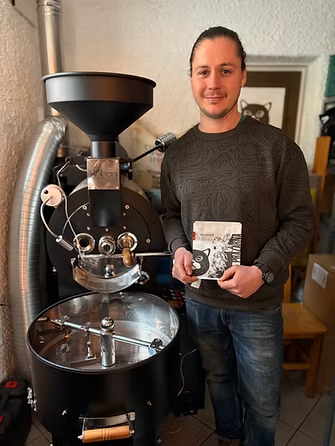
I’ve always enjoyed cooking and baking, and after moving to Ljubljana I became interested in the local coffee culture, which felt more developed than in Romania. After visiting a coffee festival in Trieste, I started roasting green coffee beans at home and quickly fell in love with the process. I also realized there was a gap in the market in Ljubljana— no micro roasteries at the time.
In 2017, I joined the Erasmus for Young Entrepreneurs program and went to Belgium for 3 months to learn about coffee roasting and business. After returning to Ljubljana, I began setting up my own venture, and in 2018 I opened Mala Pražarna.
Choosing a Slovenian Name
Why did you decide to name your business Mala Pražarna in Slovenian?
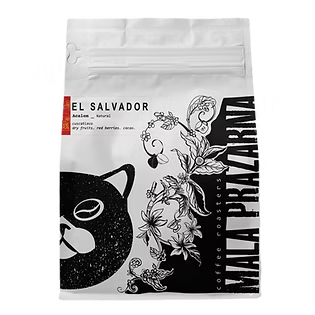
I could have chosen an English name, but I wanted to focus on the local community. Mala Pražarna means “small roastery,” and from the start, my idea was to create a neighborhood place offering freshly roasted coffee for Slovenians. Today, my customers are roughly half locals and half tourists and expats. About half of my sales come from freshly roasted coffee beans, and the other half from coffee drinks.
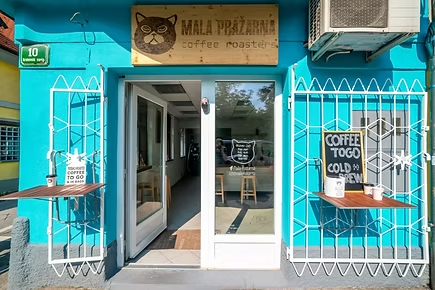
First Steps as a Foreign Entrepreneur
What were the first practical steps you took to set up your business in Slovenia?
After returning from my apprenticeship, I contacted the AJPES (SPOT) agency, which helped me navigate all the practical and legal steps. They were extremely helpful and remain a resource I can rely on today. The agency makes it easy to set up a business, providing digital certificates and online access. The start was tough. I didn’t know anyone, and progress was slow. Meeting my partner Holly, the mother of my kids, allowed us to share some costs, which made things easier.
Challenges and Obstacles
What were the biggest difficulties you faced as a foreigner starting a business here?
The first challenge was finding a location in Ljubljana. I had registered my business and bought equipment, but I had no space. I cycled around districts, took photos, and contacted owners. After eight months, I found a great spot at Krakov Nasip near the river.
The second challenge was financing. When I opened the business in February 2018, costs were mounting, but I had no income or bank loan. I raised €20,000 from family and friends to buy equipment. Banks wouldn’t provide a loan despite my detailed five-year business plan, and angel investors only backed tech startups. I had to rely on my own resources to make it work.
Language
When did you learn Slovenian and how?
Before moving to Slovenia, I took a basic language course and studied Colloquial Slovene, which helped me master the basics. After moving, I completed an intensive three-month course to strengthen grammar and structure. For speaking, the real progress came from daily practice and surrounding myself with Slovene people. Language skills helped in business set-up. I already spoke Slovene well, and the consultants spoke English, so communication was never an issue.
Marketing and Visibility
Where do you focus your marketing today? What works best?
Slovenia has a traditional coffee mentality, and selling specialty coffee can be challenging. Many owners prefer cheap coffee and equipment, so the niche is very specific. In Ljubljana, word of mouth has been the most effective way to grow the business. We tried social media, Google ads, and other marketing strategies, but personal, face-to-face promotion still works best — even a local poster often beats online ads.
Life in Slovenia and Future Plans
How has living in Slovenia influenced you personally and professionally?
Living in Slovenia has had a big “expat effect” on me — I feel I’ll always be an expat. It’s changed me personally and professionally: I’ve become more serious and in a worry state of mind. Running a small business here is challenging — government support is limited, costs and taxes are high, and you constantly need a problem-solving, creative mindset to survive.
Do you plan to stay long-term, and what’s next for Mala Pražarna?
I’ve built a strong network and I host weekly Monday coffee tastings, bringing together local and international roasters to share advice and insights. My long-term goal is to expand into the EU market while living in Slovenia. The country offers a great quality of life for my family, but if the business becomes unsustainable, we may consider moving to a more business-friendly environment. To expand, I’m developing my website and attending international coffee festivals, aiming to reach the EU market beyond Slovenia, as the local market is relatively small.
Expat Advice to Expats
What advice would you give to foreigners moving to Slovenia who are thinking about starting a business?
Slovenia offers a high quality of life — it’s safe, family-oriented, and small enough to feel like a close-knit community. However, it’s not the easiest place to start a business.
If you plan to launch a business, budget carefully and have a financial buffer for at least two years. The market is highly regulated, taxes are high for small and medium enterprises, and government support is limited. To succeed, consider building a business with potential beyond Slovenia — look to the EU market rather than relying solely on the local one.